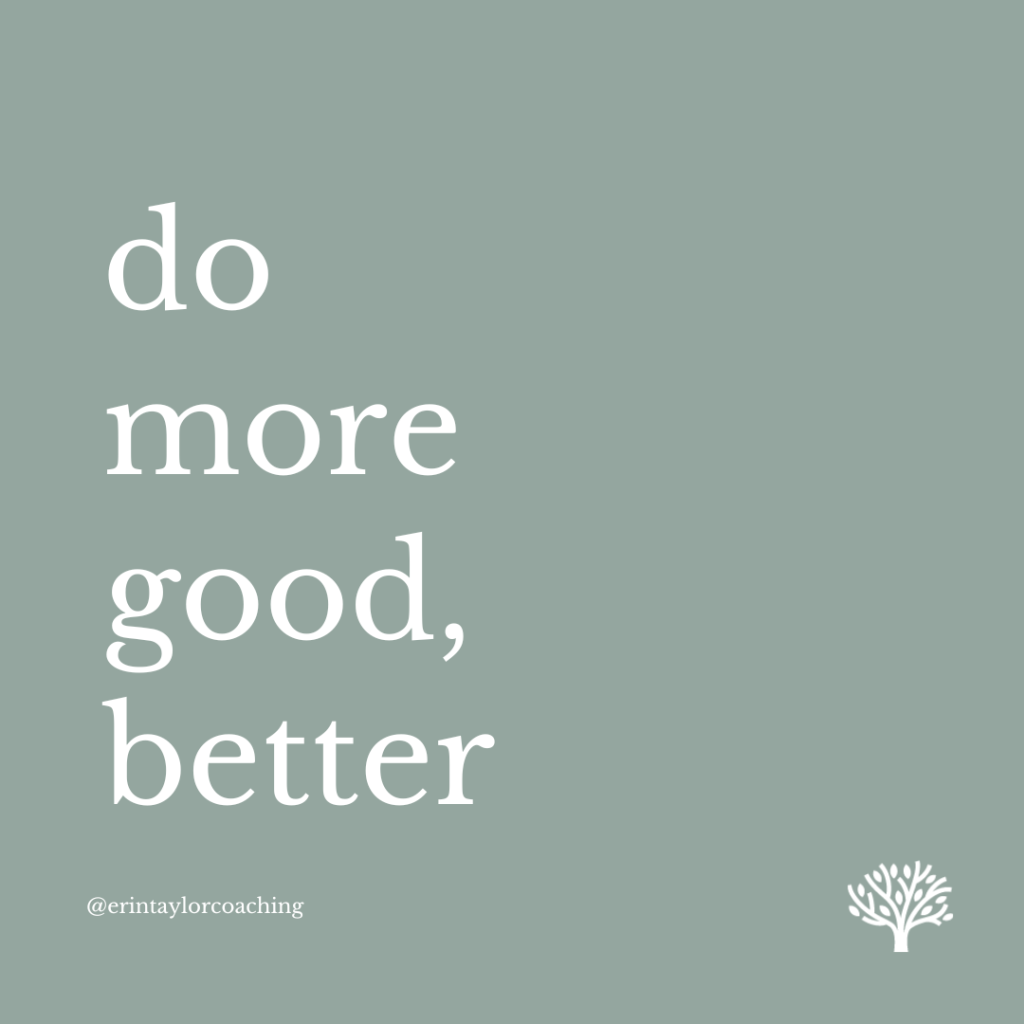
Every once in a while, someone drops a phrase that hits you right between the eyes—in the good way. Recently a colleague told me about his personal mantra which he has engraved on a favorite pen, “Do more good, better.” And I thought, well… yes. That’s it. That’s the whole assignment.
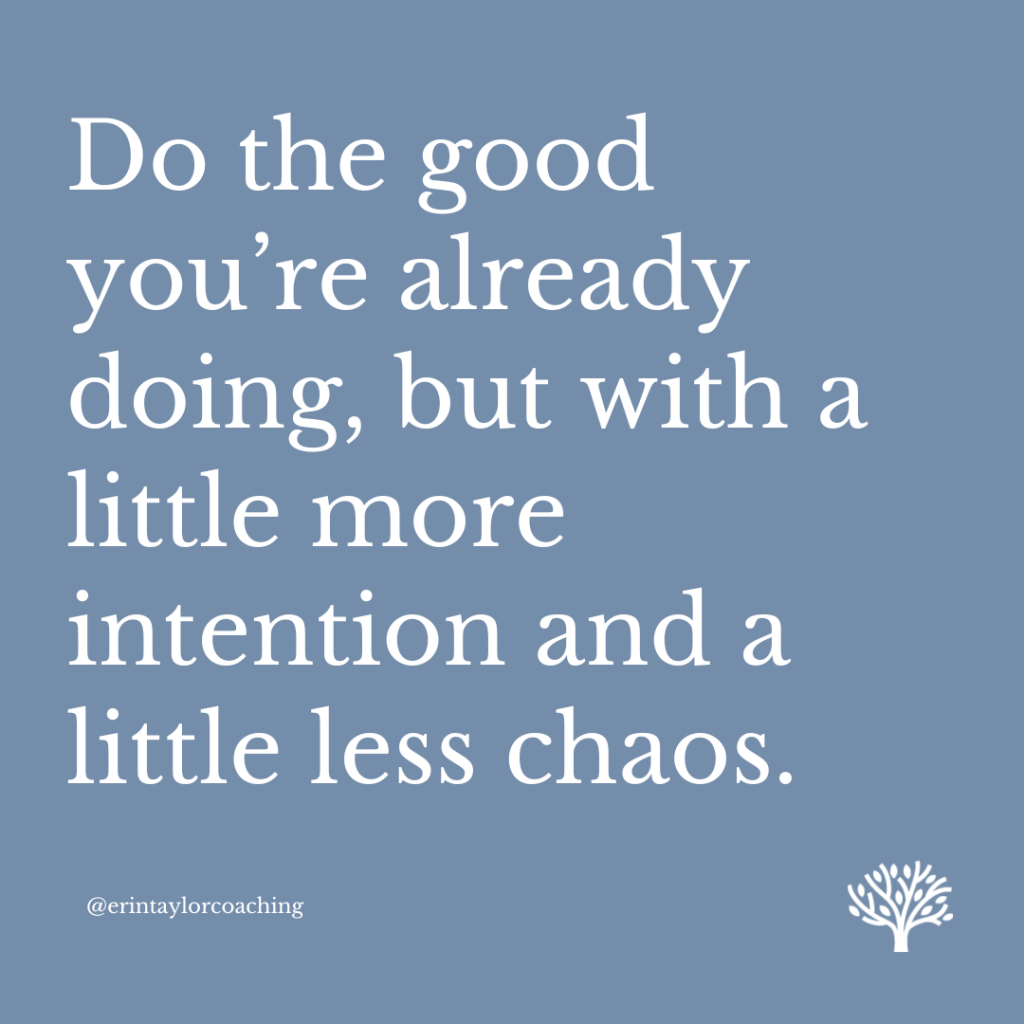
Not “do more.” Not “do it perfectly.” Just… do the good you’re already doing, but with a little more intention and a little less chaos.
If you’ve ever worked with me, you know I love a mantra that’s both inspiring and practical. This one checks both boxes.
What “Do More Good, Better” Really Means
Let’s be honest: most of us are already doing a lot of good. We’re raising families, leading teams, showing up for our communities, trying to be decent humans in a world that occasionally feels like a group project gone wrong. The invitation isn’t to add more to your plate. It’s to refine what’s already there.
When I’m coaching clients, this often sounds like:
- “Let’s slow this down so your effort actually lands where you want it to.”
- “You don’t need to do all the things—just the right things.”
- “Your presence is more powerful than your productivity.”
- “Let’s make sure your energy is aligned with your intention.”
Doing good is easy. Doing good well is a practice.
A Little Theo Energy
I just finished reading Theo of Golden, and while I’m not diving into religious themes here, I will say this: Theo is a masterclass in grounded goodness.
He listens deeply. He responds thoughtfully. He moves through the world with a kind of steady, quiet clarity that makes people feel seen.
And honestly? That’s the kind of energy I want for myself, my clients, and anyone trying to “do more good, better.”
Theo reminds us that goodness isn’t loud. It’s not performative. It’s not about being the hero in every room. It’s about being the person who shows up with intention, kindness, and a sense of grounded presence.
You don’t have to be perfect. You just have to be aware.
Doing Good Without Burning Out
Here’s the part I emphasize with clients all the time: You cannot do good work from exhausted energy.
You can’t be present when you’re stretched thin. You can’t be compassionate when you’re running on fumes. You can’t be wise when you’re overwhelmed.
Your “better” comes from:
- Rest that isn’t performative
- Boundaries that actually hold
- Work that aligns with your values
- Conversations that nourish instead of drain
- A pace that lets you breathe
Theo didn’t sprint through life. He walked. He noticed. He chose. And we can too.
A Gentle Challenge for July
Ask yourself: Where can I do the good I’m already doing… just a little better?
Not bigger. Not louder. Not more.
Just better.
And if you want support refining that goodness—your leadership, your boundaries, your presence—you know where to find me.
With steadiness, humor, and a whole lot of heart, Erin.
Books by My Bedside:
Them – Why We Hate Each Other and how to Heal,
by Ben Sasse
It’s election season and the perfect time to read this book. If you’ve ever felt like the world is getting louder, meaner, and more divided—Ben Sasse’s book Them will feel like someone finally turned the volume down long enough for you to think straight. It’s not a political book in the “pick a side” way. It’s a book about belonging, community, and why humans are wired for connection even when we behave like we’re wired for combat.
And honestly? It’s exactly the kind of grounding message we need in an election season.
Sasse argues that the real crisis in America isn’t political polarization—it’s loneliness. Not the “I need more friends” kind, but the deeper, quieter loneliness that comes from losing:
- community rhythms
- shared purpose
- meaningful conversations
- the ability to disagree without detonating the relationship
As a coach, I see this all the time. People aren’t actually craving more information or more arguments—they’re craving belonging, clarity, and connection that feels safe.
Sasse’s point is simple: When people feel disconnected, they cling harder to identity groups, outrage cycles, and “us vs. them” thinking.
Sound familiar?
Election seasons tend to amplify our worst habits:
- We assume the worst about people we disagree with.
- We talk at each other instead of with each other.
- We let fear hijack our nervous systems.
- We forget that most people want the same basic things: safety, stability, opportunity, and a future worth investing in.
Sasse’s message is a reminder that politics doesn’t have to be a personality test. And disagreement doesn’t have to be a relationship‑ender.
In coaching sessions, I often help clients:
- slow down their reactions
- separate identity from opinion
- stay grounded in their values
- communicate with curiosity instead of defensiveness
This book reinforces those same principles.
Theo approved mindful practices…
Them and Theo of Golden share a similar thread: Goodness is relational. It’s how we show up with steadiness, kindness, and clarity—especially when things get tense.
Here are a few “Theo‑ish” practices that align beautifully with Sasse’s message:
- Listen longer than feels comfortable
- Ask questions that soften the room
- Assume complexity instead of caricature
- Stay grounded in your values, not the noise
- Remember that people are more than their vote
These are the same tools I encourage clients to use when navigating conflict, leadership challenges, or emotionally charged seasons.
If you’re feeling overwhelmed by the election season, Them offers a steadying reminder: We can choose connection over combat. We can choose curiosity over caricature. We can choose to “do more good, better” even when the world feels divided.
And we can practice being the kind of person who brings calm, clarity, and grounded presence into the room—no matter what’s happening on the news.
What People Say
“Working with Erin gave a me a different perspective on why I need balance in my life and how to achieve it. Not knowing what to expect, working with Erin was one of the best things I ever did!”
– K.L.